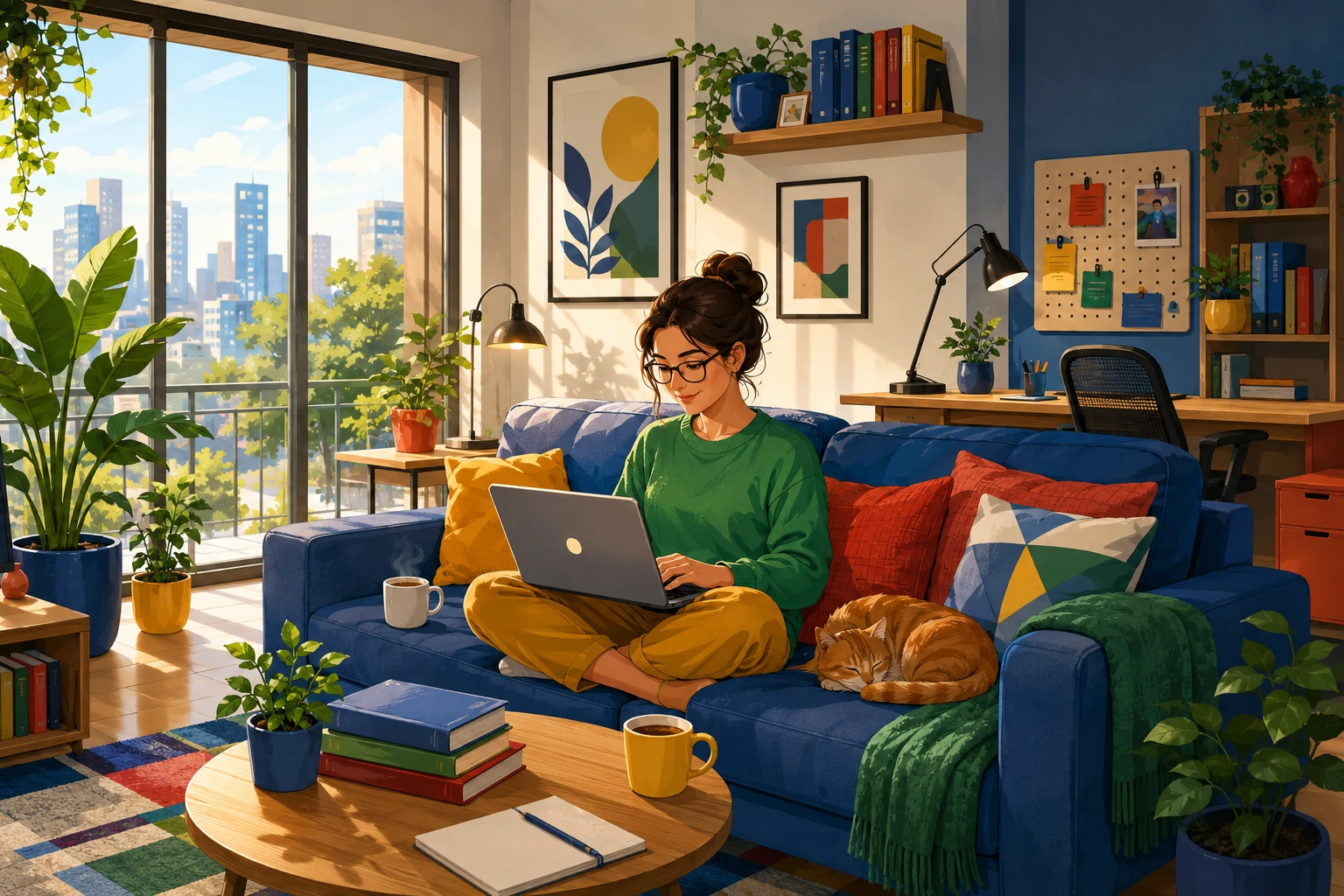
The global shift towards remote work has altered the residential real estate market. As of 2024, 12.7 percent of full-time employees in India work from home, while 28.2 percent are employed in a hybrid model.
This transition means that our living spaces must function as professional hubs without sacrificing personal comfort. Developers are responding by designing modern apartments with adaptable rooms to support long-term productivity.
Characteristics of work-from-home residences
Dedicated home office spaces
Instead of temporary desk setups and guest rooms, developers are now including built-in study alcoves. These spaces are located away from noisy areas, such as kitchens, to offer privacy and a corporate backdrop. Modern layouts also include “flex-rooms” that can be easily converted into professional studios or libraries.
Soundproofing for better productivity
Productivity depends significantly on a quiet environment, leading builders to invest in advanced acoustic insulation. Using specialised materials can increase concentration by 48 percent by blocking out neighbourhood and household noise. Acoustic glass and wall panels are now standard features in premium residential work zones.
High-speed internet infrastructure
Reliable connectivity is the backbone of the digital economy, given India’s 100.28 crore internet subscribers as of June 2025. Developers pre-install fibre-optic cables and mesh Wi-Fi systems to prevent any dead zones. This infrastructure ensures that video conferencing and large data transfers happen without any lag.. Developers pre-install fibre-optic cables and mesh Wi-Fi systems to prevent any dead zones. This infrastructure ensures that video conferencing and large data transfers happen without any lag.
Multifunctional and convertible furniture layouts
Space optimisation is critical, as 67 percent of urban residents prefer multifunctional furniture over fixed units. Developers offering flexible layouts accommodate Murphy beds, foldable desks and modular shelving systems. These convertible designs allow a room to serve as an office by day and a lounge by night.
Smart home automation integration
The smart home market in India is expected to reach US$ 9.2 billion in volume by 2028. Technology is being embedded into houses to create an efficient living and working environment. Residents can now effortlessly control lighting, climate and security systems through centralised mobile applications.
Enhanced natural lighting and ventilation
Architects are prioritising large, energy-efficient windows to boost the well-being of the remote workforce. Natural daylight exposure helps improve overall well-being. Proper ventilation also ensures a steady supply of fresh air, which is vital for maintaining cognitive function.
Private balconies
Balconies have evolved into essential “breakout zones” for home-bound employees, providing necessary connection to the outside world during long workday. Developers are sizing these spaces to comfortably fit a small table, a chair and potted plants.
Integrated charging stations and power backups
Reliable backup systems are prioritised to ensure uninterrupted power supply during local grid failures. Integrated USB charging ports and universal sockets are also built directly into study desks, kitchen islands and bedside tables.
Features of hybrid lifestyles in residential complexes
Co-working zones and shared meeting rooms
To bridge the gap between home and office, developers are building shared corporate lounges. These homes with co-working spaces provide a professional ambience for residents who want to leave their flat. They include posture-supporting seating and private pods to provide a comfortable working experience.
High-tech business centres with printing
Access to professional-grade hardware is necessary, even in a paperless world. The value of India’s printer market was US$ 1.78 billion in 2025, reflecting this demand. On-site business centres offer high-quality printing, scanning and courier services to meet all residents’ needs.
Recreational amenities supporting work-life balance
Flexibility is now a top priority, with 52 percent of Indian employees willing to leave jobs without it. Complexes are adding “chill-out” zones, meditation decks and hobby rooms to encourage regular mental breaks. These amenities help residents disconnect from work without leaving their building.
Package rooms for frequent deliveries
With US$ 80-90 billion in online retail spending coming from gated communities, secure package rooms are vital. These rooms include refrigerated lockers for groceries and digital tracking for high-value tech deliveries. This system ensures that work is not interrupted by the need to meet couriers.
Retail and convenience services
Integrated townships and gated communities include essential retail outlets, pharmacies and cafes within the complex. Having these services nearby reduces time spent on chores, allowing more focus on professional goals.
Wellness centres for physical health
Sedentary lifestyles are a concern, as 43 percent of adults aged 18 years and above were overweight in 2022. Residential gyms and yoga studios have become more advanced, offering professional-grade equipment and digital fitness classes that help residents stay active.
Green spaces for mental clarity
Nature plays a huge role in performance, as greenery and sunlight exposure are known to improve productivity and mental well-being. Expansive gardens and walking trails provide a therapeutic environment for residents to decompress after intensive meetings and maintain long-term mental health. and mental well-being. Expansive gardens and walking trails provide a therapeutic environment for residents to decompress after intensive meetings and maintain long-term mental health.
Enhanced security and access control
Safety is paramount when homes contain expensive professional equipment and sensitive corporate data for work. Modern complexes use biometric access, AI-enabled CCTV and 24/7 manned security to ensure total peace of mind. This allows residents to focus entirely on their tasks without worrying about safety.
Key differences between traditional houses and residences with a hybrid setup
| Parameters | Traditional houses | Residences with a hybrid setup |
| Room layout | Fixed rooms for sleeping and dining. | Flexible rooms with built-in work zones. |
| Connectivity | Standard wiring for basic internet needs. | Integrated high-speed fibre-optic infrastructure throughout. |
| Acoustics | Standard walls with basic sound insulation. | Specialised soundproofing and acoustic wall panels. |
| Furniture | Space for large, heavy units. | Designed for multifunctional and foldable furniture. |
| Power supply | Basic backup for lights and fans. | Dedicated UPS points for advanced tech. |
| Automation | Manual switches and standard electrical points. | Comprehensive smart home and IoT integration. |
| Light and ventilation | Windows are installed for general ventilation. | Architecturally optimised for maximum natural daylight. |
| Delivery | Security desks handle all incoming parcels. | Automated package rooms with cold storage. |
Conclusion
The future of residential real estate lies in its ability to adapt to evolving professional needs. Developers are now creating homes that work as sanctuaries for both productivity and personal well-being.
By choosing forward-thinking projects by Sattva Group, you can enjoy a perfectly balanced hybrid lifestyle.